Hey there! Let’s talk like we’re sitting together at a table with a cup of tea (or juice!).
You’ve probably heard the word metaphor a thousand times, but when you try explaining it to kids… boom, everything suddenly gets complicated. Don’t worry—I’ve got your back.
Today, I’ll walk you through metaphors for kids in the simplest, clearest, and friendliest way possible.
Think of me as your buddy who’s here to make learning fun, quick, and drama-free. Ready? Let’s dive in.
20 Metaphors for Kids (With Meaning, Explanation & Examples)
1. “The classroom was a zoo.”
Meaning: The classroom was noisy and chaotic.
Explanation: The kids aren’t animals, but the room felt wild like a zoo.
Examples:
- When the teacher left, the classroom was a zoo.
- After recess, the whole room turned into a zoo again.
2. “My brother is a walking encyclopedia.”
Meaning: He knows a lot of information.
Explanation: He isn’t literally a book, but he remembers facts like one.
Examples:
- Ask him anything—he’s a walking encyclopedia.
- With all his knowledge, he’s basically an encyclopedia on legs.
3. “Her smile is sunshine.”
Meaning: Her smile makes everyone feel happy.
Explanation: Sunshine brightens your mood, just like her smile does.
Examples:
- When she walked in, her smile was sunshine.
- His day brightened because her smile felt like sunshine.
4. “Time is a thief.”
Meaning: Time passes quickly and takes moments away.
Explanation: Time can’t steal, but it feels like it takes things from us.
Examples:
- Summer ended so fast—time is a thief.
- They grew up so quickly because time stole the years.
5. “He has a heart of gold.”
Meaning: He is very kind and generous.
Explanation: His heart isn’t real gold—it just means he’s a good person.
Examples:
- She helped everyone—she has a heart of gold.
- His kindness shows a golden heart.
6. “The wind was a whisper.”
Meaning: The wind was very soft.
Explanation: Whispering is gentle, just like the quiet wind.
Examples:
- Last night, the wind was a whisper.
- A soft breeze came in, whispering through the leaves.
7. “The moon was a silver lantern.”
Meaning: The moon shone brightly like a lamp.
Explanation: It lit up the night sky like a lantern.
Examples:
- On our walk, the moon was a silver lantern.
- The sky glowed because the moon hung like a lantern.
8. “Her voice is music.”
Meaning: Her voice is pleasant or beautiful.
Explanation: Music sounds nice, just like her voice.
Examples:
- When she talks, her voice is music.
- His mother’s voice was music to his ears.
9. “The world is a stage.”
Meaning: Life is like a big performance.
Explanation: Just like actors perform, people play roles in life.
Examples:
- With all those speeches, the world felt like a stage.
- Her presentation made her feel like she was on a stage.
10. “The snow is a white blanket.”
Meaning: Snow covers everything like a blanket.
Explanation: A blanket covers you; snow covers the ground similarly.
Examples:
- This morning, the snow was a white blanket.
- The fields were hidden under a cold, white blanket.
11. “His stomach was a bottomless pit.”
Meaning: He was extremely hungry.
Explanation: No matter how much he eats, it feels like there’s space.
Examples:
- After sports, his stomach was a bottomless pit.
- She kept eating—a pit that never filled.
12. “The stars were tiny diamonds.”
Meaning: The stars were bright and shiny.
Explanation: Diamonds sparkle just like stars.
Examples:
- At night, the stars were tiny diamonds.
- The sky glittered with diamond-like stars.
13. “Her mind is a computer.”
Meaning: She thinks quickly and remembers everything.
Explanation: Computers store information efficiently—like her brain.
Examples:
- She solves problems fast—her mind is a computer.
- With all her memory, her brain is as sharp as a computer.
14. “The playground was a circus.”
Meaning: It was loud, busy, and lively.
Explanation: A circus is a noisy, fun place—just like playground chaos.
Examples:
- During recess, the playground was a circus.
- Kids running everywhere created a circus of activity.
15. “He is a shining star.”
Meaning: He is talented or stands out.
Explanation: Stars shine brightly, just like he shines in what he does.
Examples:
- She got the award—a shining star.
- His performance made him the star of the night.
16. “Her eyes were oceans.”
Meaning: Her eyes looked deep or full of emotion.
Explanation: Oceans are deep and wide—like expressive eyes.
Examples:
- When she cried, her eyes were oceans.
- His big blue eyes looked like endless oceans.
17. “The clouds were cotton candy.”
Meaning: The clouds looked soft and fluffy.
Explanation: Cotton candy is fluffy, just like certain clouds.
Examples:
- On the way home, the clouds were cotton candy.
- The sky looked sweet with cotton-candy clouds.
18. “The teacher was a lighthouse.”
Meaning: The teacher guided and helped students.
Explanation: A lighthouse helps ships find direction—just like a teacher.
Examples:
- During hard lessons, the teacher was a lighthouse.
- Her advice shined like a guiding lighthouse.
19. “His anger was a volcano.”
Meaning: He was very angry.
Explanation: A volcano erupts—just like anger can burst out.
Examples:
- When he lost the game, his anger was a volcano.
- She avoided him because he looked like an erupting volcano.
20. “Her imagination is a wild garden.”
Meaning: She has many creative ideas.
Explanation: A garden grows wildly—like her creative thoughts.
Examples:
- With her stories, her imagination is a wild garden.
- His ideas grew like flowers in a wild garden.
Practical Exercise: 10 Questions + Answers
Questions
- What does the metaphor “the classroom was a zoo” mean?
- If someone has a “heart of gold,” how do they behave?
- What is being compared in “snow is a white blanket”?
- What does “a volcano of anger” describe?
- What does it mean when someone is a “shining star”?
- If “the wind is a whisper,” how is the wind?
- What does “a walking encyclopedia” suggest about a person?
- In “her smile is sunshine,” what is sunshine being compared to?
- What does “his mind is a computer” imply?
- What does “the playground was a circus” mean?
Answers
- The classroom was noisy and chaotic.
- They are kind and generous.
- Snow covering the ground like a blanket.
- Someone is very angry.
- The person is talented or stands out.
- The wind is soft and gentle.
- They know a lot of information.
- Her smile, which makes people happy.
- They think quickly and remember things well.
- The playground was loud, busy, and wild.
Conclusion
Teaching metaphors to kids doesn’t have to feel like climbing a mountain. With simple comparisons, fun explanations, and clear examples, kids can easily understand how metaphors bring language to life.
The more they practice, the more creative and confident they’ll become in expressing themselves.
Keep exploring, keep imagining, and keep comparing—because metaphors make learning magical.
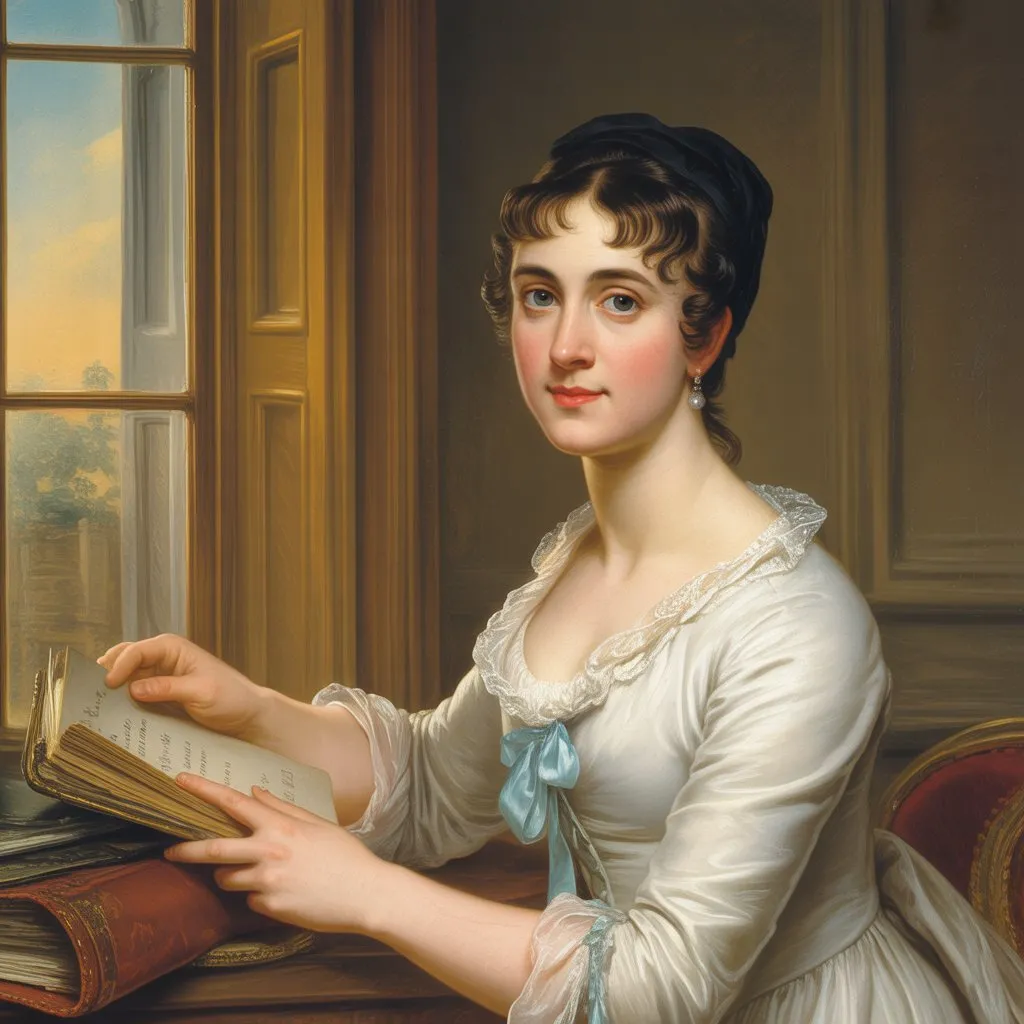
Jane Austen (1775–1817) was an English novelist famous for her witty, romantic stories about love, manners, and social class. Her classic books, like Pride and Prejudice and Sense and Sensibility, are still loved today for their sharp humor and memorable characters.
Discover more literary gems at mitaphre.com.